English| EUR
Suggested for you
More currencies
Choose a language
La Jolla Cove offers the most accessible ocean snorkeling in Southern California, with calm protected waters and a kelp forest ecosystem visible from the surface. The San Diego-La Jolla Underwater Park Ecological Reserve extends from shore to 600 feet offshore, creating a sanctuary where garibaldi, leopard sharks, and sea lions share the same kelp-lined channels you'll swim through.
Quick answer
La Jolla Cove is open 24 hours daily with free beach access, making it the most beginner-friendly snorkeling destination in San Diego. The protected ecological reserve keeps boat traffic out and visibility averages 15 to 30 feet most mornings. Arrive between 7:00 and 10:00 AM when wind is minimal and before afternoon chop reduces underwater clarity—water temperature holds steady at 59 to 68°F year-round, so a wetsuit is recommended even in summer.
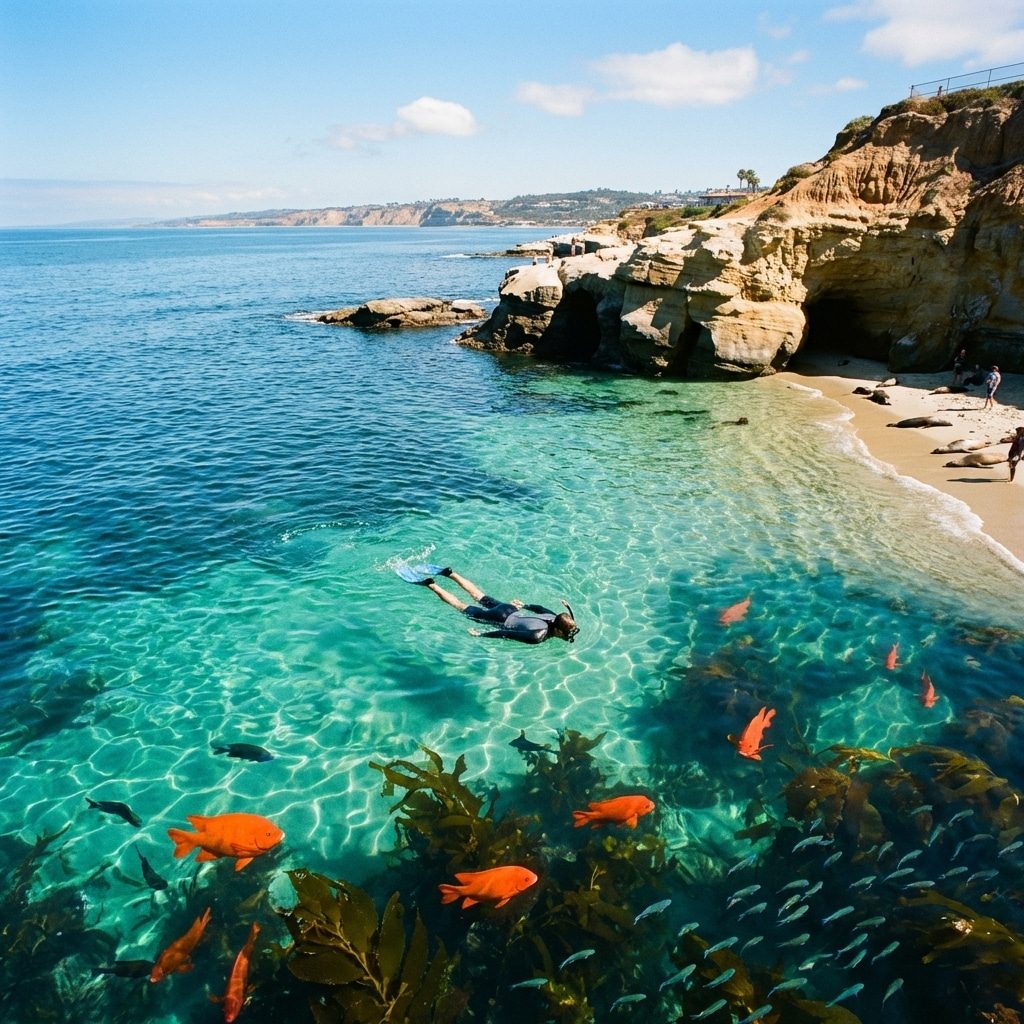
The kelp forest starts 20 feet from shore, close enough that first-time snorkelers can stand on sand and see swaying amber fronds below the surface before committing to deeper water. This proximity is why snorkeling in San Diego for beginners centers on La Jolla Cove—most beginner snorkel sites require boat access or long surface swims, but here the ecological reserve begins at the waterline. The cove's crescent shape blocks offshore swells, and the southern headland shelters the entry beach from wind until midday. Garibaldi damselfish—California's official state marine fish—patrol the kelp holdfasts in bright orange schools, unbothered by snorkelers drifting overhead. Leopard sharks rest on the sand flats in summer, and California sea lions glide past in hunting runs, close enough to observe their whiskers and flippers but indifferent to human presence. The reserve status prohibits fishing and shell collecting, so the ecosystem remains dense with life that behaves as if humans are just another large, slow species. Visibility shifts with tide and season. Winter storms reduce clarity to 10 feet, but summer mornings after calm nights can open the water column to 40 feet of blue depth. Most beginners stay within the cove's protected arc where the bottom slopes gently from 5 to 15 feet, but confident swimmers follow the kelp line north toward the sea caves, where the floor drops to 25 feet and bat rays rest in the sand. The reserve extends across 6,000 acres of seafloor, but 90 percent of beginner snorkeling happens within 200 yards of the beach. The afternoon wind pattern—onshore gusts building after 11:00 AM—is the single factor that separates a good session from a frustrating one. Surface chop cuts visibility and makes mask clearing difficult for beginners still learning breath control. Early starts also avoid the midday crowd, when limited beach space fills with kayak rentals and tour groups staging at the same entry point. The combination of free access, proximity to downtown San Diego, and a protected ecosystem means La Jolla Cove functions as both a beginner training ground and a reliable year-round snorkeling site, a rare overlap in Southern California's coastal geography.
“The kelp forest starts 20 feet from shore, close enough that first-time snorkelers can stand on sand and see swaying amber fronds below the surface before committing to deeper water.”
The best arrival window for snorkeling at La Jolla Cove is 07:00–10:00. Arriving during this period helps you beat the afternoon wind, which often creates surface chop and reduces underwater visibility.
70°F–75°F water; calm mornings
Warmest water temperatures of the year make this ideal for beginners. Morning conditions remain the most stable for visibility
60°F–65°F water; frequent marine layer
Expect overcast mornings known as June Gloom, though winds remain light early. Visibility is generally clear before afternoon breezes develop
—
Mid-week visits offer the most space on the beach and in the water. Plan to arrive by 07:00 to maximize calm water conditions.
Verdict: The optimal time to visit is a weekday morning between 07:00–10:00 during the months of August or September.
This procedure covers the physical steps from parking at 1100 Coast Blvd to entering the water at La Jolla Cove. The entire sequence takes 20–30 minutes if you arrive prepared.
Park in the nearby lots on Coast Boulevard and walk down to the grassy overlook above the cove. Many visitors stop here instead of continuing to the beach access stairs on the north side.
Take the public staircase on the north end of the cove that leads directly to the sand. The southern rocky areas look accessible but have no safe entry points.
Put on your mask, fins, and snorkel while still on dry sand and test the mask seal by inhaling through your nose. Waiting until you're in the water means you'll struggle with fit adjustments in the surf.
Wade in from the middle of the small beach where the sand extends into the water, not from the rocky edges. The rocks are slippery with algae and the kelp beds near them can tangle beginners.
Swim parallel to shore within the protected area marked by yellow buoys. The reserve extends 600 feet from shore—venturing beyond puts you in boat traffic and stronger currents.
La Jolla Cove is a public beach and marine reserve maintained by the city of San Diego. Access to the water and shoreline requires no admission fee.
Verdict: Visitors pay 0 USD for admission, though equipment rentals or guided tours from third-party providers are separate expenses.
La Jolla Cove is accessible for snorkeling throughout the entire week, providing constant access to the marine reserve. Visitors may enter the water at any time, day or night.
La Jolla Cove is located at 1100 Coast Blvd, La Jolla, CA 92037. The most direct approach is by car via I-5, exiting toward La Jolla Village Drive or Torrey Pines Road.
I-5 to La Jolla Village Drive, then west to Coast Blvd
MTS Route 30 to La Jolla Blvd & Marine St
Walking from La Jolla Village center to Coast Blvd
Parking in La Jolla Cove is limited and fills quickly; aim to arrive during the early morning window to secure a spot near the beach access point.
La Jolla Cove sits within the San Diego-La Jolla Underwater Park Ecological Reserve, where marine life and habitat protection rules carry legal weight. Follow distance and conduct guidelines to keep wildlife safe and avoid citations.
Pack the right gear to stay safe and comfortable in the water at La Jolla Cove.
Everything you need to know about snorkeling in san diego for beginners
La Jolla Cove is an excellent location for snorkeling in san diego for beginners due to its calm, protected waters and abundant marine life. The area is part of a state marine reserve, which ensures that fish and other sea creatures remain protected and plentiful for visitors to observe.
The best arrival window for your visit is 07:00–10:00 to beat the afternoon wind that often creates chop and reduces water visibility. Arriving early also helps you secure parking and find a spot on the beach before the mid-day crowds gather.
There is a 0 USD entrance fee to the beach and marine reserve, making it an accessible activity for everyone. You can enjoy the natural beauty and underwater scenery without worrying about admission costs.
When planning your snorkeling in san diego for beginners adventure, it is important to check the local ocean conditions and tides. Always stay within your comfort level and keep a safe distance from sea lions and harbor seals resting on the rocks.
The beach facility does not rent gear directly, so you should arrange for mask, snorkel, and fin rentals from a local dive shop before heading to the cove. Having your own or rented equipment ready ensures you can maximize your time in the water.
The site is monitored by the San Diego Lifeguard Service, which provides safety oversight for all visitors. Please respect their instructions and observe all posted signage regarding water safety and wildlife interactions.