English| EUR
Suggested for you
More currencies
Choose a language
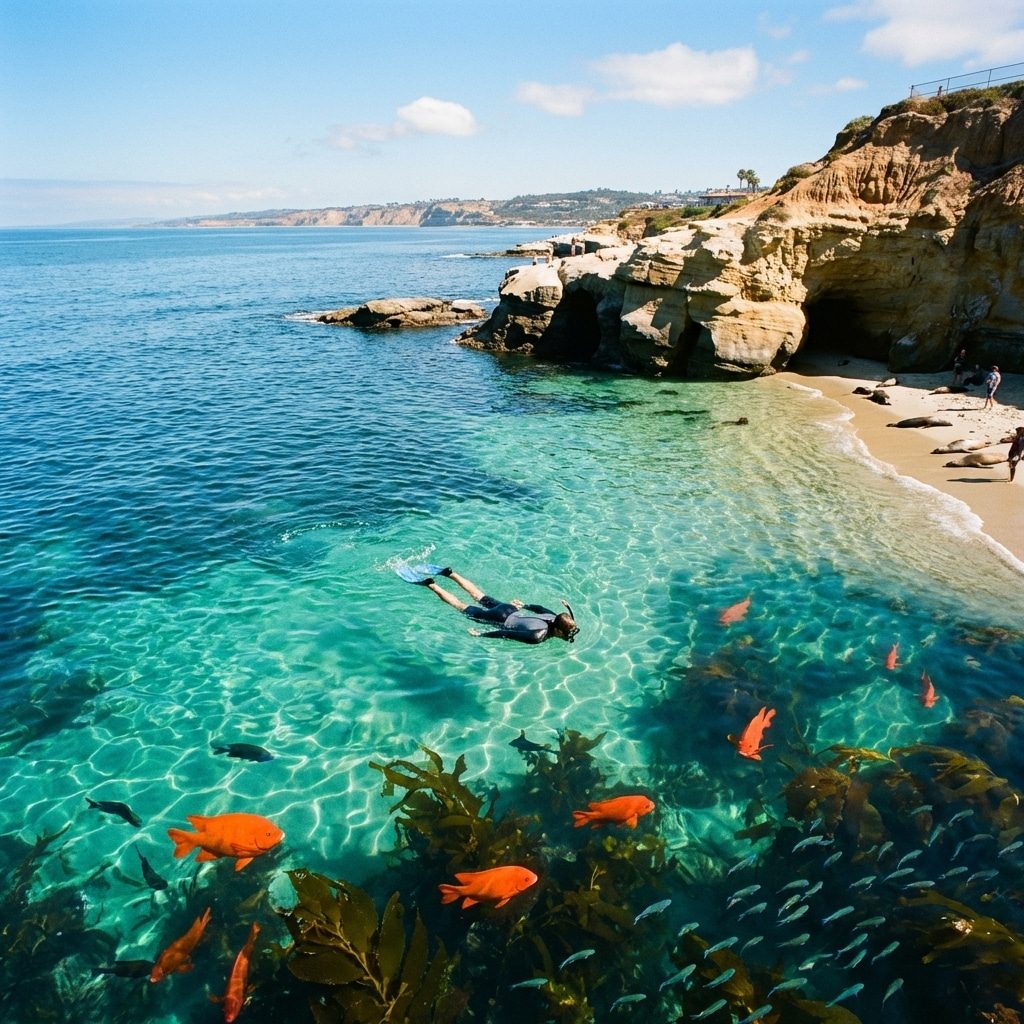
La Jolla Cove sits at the heart of the San Diego-La Jolla Underwater Park Ecological Reserve, a 6,000-acre protected marine area that makes it the city's premier snorkeling destination. The cove's rocky substrate, kelp beds, and sheltered configuration create habitat for garibaldi, leopard sharks, and bat rays year-round.
Quick answer
La Jolla Cove is the definitive answer for where to go snorkeling in San Diego, open 24 hours daily with free public access at 1100 Coast Boulevard. The site's protected status within the San Diego-La Jolla Underwater Park ensures consistent marine life encounters, while the cove's natural shelter from prevailing swells makes it accessible to intermediate swimmers most of the year.
The Cove's kelp forest begins in water shallow enough to touch bottom and extends seaward into depths exceeding sixty feet, creating vertical habitat zones visible in a single swim. Garibaldi damselfish—California's state marine fish—patrol the kelp canopy in numbers that startle first-time visitors, their orange bodies unmistakable against the green-brown fronds. San Diego's Mediterranean climate produces two distinct snorkeling seasons at La Jolla Cove. Summer and early autumn bring water temperatures in the mid-60s Fahrenheit, thermoclines that sharpen visibility to thirty feet or more, and calm morning surface conditions. Winter swells and spring plankton blooms reduce clarity but increase the likelihood of encountering leopard sharks in the shallows and migrating gray whales offshore. The ecological reserve prohibits all extractive activities—no fishing, no collecting, no shellfish harvest—which has allowed rockfish, sheephead, and octopus populations to recover to levels unseen elsewhere along the urban San Diego coastline. Entry requires navigating a narrow beach at the base of sandstone cliffs, with no lifeguard tower directly on-site but emergency services accessible via the adjacent Ellen Browning Scripps Park. The northern kelp beds offer the richest biodiversity but demand strong surface-swimming stamina and awareness of boat traffic from the nearby La Jolla Shores launch ramp. Southern routes toward the sea caves present calmer water but shallower rocky bottom that concentrates surge energy during any swell event. Where to go snorkeling in San Diego comes down to La Jolla Cove's unique combination of ecological protection, urban accessibility, and year-round reliability—attributes no other site within San Diego County matches in a single location. The reserve's boundaries extend from the shoreline to six hundred feet offshore, marked by buoys that delineate the no-take zone. Underwater, the transition from sand to reef occurs within twenty strokes of the beach, and the kelp holdfast clusters provide navigation references for returning to shore in conditions where surface chop obscures the coastline.
“The ecological reserve prohibits all extractive activities, allowing rockfish and octopus populations to recover to levels unseen elsewhere along the urban San Diego coastline.”
The best arrival window for snorkeling at La Jolla Cove is 06:30–10:00. Arriving during this period helps visitors avoid afternoon winds, heavy crowds, and reduced water visibility.
70–75°F water, calm seas
Warmest water temperatures attract the most visitors to the cove during this time.
55–60°F water, potential surf
Visibility often improves in winter, though thermal protection is necessary for the colder water.
—
Early weekday visits offer the clearest water conditions and the easiest access to the shoreline.
Verdict: For optimal conditions, plan your visit for a weekday morning between 06:30–10:00 during the months of September or October.
La Jolla Cove is accessible to the public 24 hours a day, seven days a week. Please note that lifeguard coverage varies and may not be active during all hours of operation.
La Jolla Cove is located at 1100 Coast Blvd, La Jolla, CA 92037. The most direct approach is by car via Interstate 5, taking the La Jolla Village Drive or Ardath Road exits toward the coastline.
Interstate 5 to La Jolla Village Drive
MTS Route 30 to La Jolla Blvd & Marine St
Direct to 1100 Coast Blvd
Parking along Coast Boulevard is limited and fills quickly, so consider utilizing public parking lots further inland or nearby residential streets. Once parked, a short paved path leads down from the street level directly to the beach access point.
La Jolla Cove sits within a Marine Protected Area where state and federal regulations protect marine life and habitat. Lifeguards enforce these rules year-round to preserve the ecosystem.
Everything you need to know about where to go snorkeling in san diego
La Jolla Cove is widely considered the premier location where to go snorkeling in San Diego due to its protected status and rich marine biodiversity. The area is part of the San Elijo and La Jolla Underwater Park, which attracts snorkelers looking to spot sea lions and bright orange garibaldi. Exploring these waters provides a clear view of the kelp forests that characterize the Southern California coastline.
Entry to the beach at La Jolla Cove is 0 USD as it is a public facility. You do not need to pay an admission fee to access the water for recreational activities. While entrance is free, visitors should note that this is a protected marine reserve where collecting shells or disturbing wildlife is strictly prohibited.
The best arrival window is 06:30–10:00 to ensure you enjoy the clearest water visibility. Visiting during these morning hours helps you avoid the high winds and heavy afternoon crowds that often impact snorkeling conditions. Finding parking is also significantly easier if you arrive early in the day.
The beach and surrounding areas are open monday through sunday from 00:00–23:59. While the site remains accessible throughout these hours, most snorkeling activity is concentrated during daylight. Always monitor local tide charts and lifeguard reports before entering the water.
To determine where to go snorkeling in San Diego, visitors should first research the current ocean conditions and check in with the local lifeguards. The official site at https://www.sandiego.gov/lifeguards/beaches/ljcove provides essential safety updates and beach rules. Proper preparation is the best way to enjoy your time in this popular destination.
La Jolla Cove is a great place to introduce family members to marine life in a protected environment. Since you are asking where to go snorkeling in San Diego with kids, this location remains a top choice for its calm, shallow entrance points. Always maintain a respectful distance from harbor seals and sea lions resting on the nearby rocks.
While the cove itself has no rental facilities directly on the sand, many local outfitters operate nearby to support those researching where to go snorkeling in San Diego. These shops provide wetsuits, masks, and fins for those who do not have their own gear. Checking local rental listings before your arrival ensures you have everything needed for a safe underwater excursion.